SAP ECC vs. S/4HANA: ERP Migration Choices
SAP, ERP Strategy, S/4HANA Migration
Navigating the ERP Crossroads: Risks of Leaving SAP ECC for Non-SAP vs. Upgrading to S/4HANA
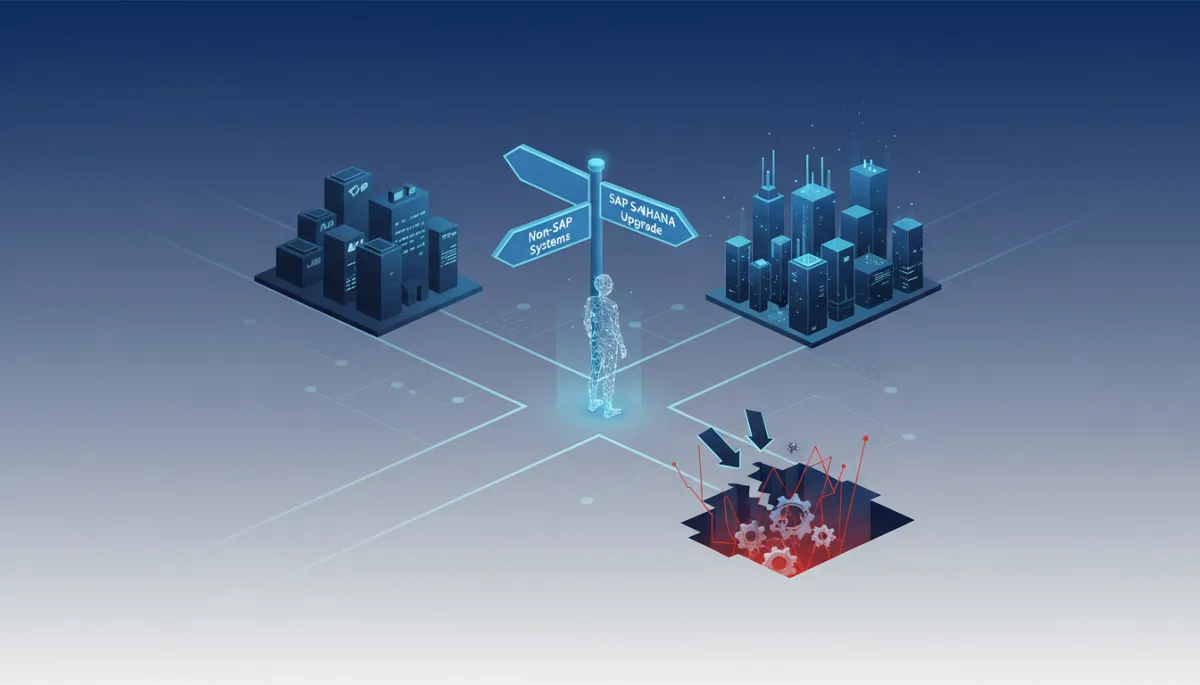
As SAP ECC approaches end of maintenance, many organizations are standing at a strategic crossroads: leave SAP entirely for a non-SAP ERP, or upgrade to SAP S/4HANA. The decision you make now will shape your operational resilience, innovation potential, and total cost of ownership for the next decade or more.
Understanding the ERP Decision Point
For years, SAP ECC has been the backbone of core business processes in finance, supply chain, manufacturing, and more. With mainstream maintenance ending, organizations can no longer postpone a decision. The choice is not simply technical; it is a business transformation decision that affects processes, people, and performance across the enterprise.
At a high level, you are weighing two primary paths:
Migrating from SAP ECC to a non-SAP ERP platform, or
Upgrading your existing landscape to SAP S/4HANA.
Risks of Leaving SAP ECC for a Non-SAP ERP
On the surface, switching to a non-SAP ERP can look attractive—new interfaces, aggressive pricing, or promises of rapid deployment. However, for organizations that have spent years refining SAP-driven processes, the hidden risks can be significant and long-lasting.
1. Loss of Proven, SAP-Embedded Business Processes
Your SAP ECC system likely contains deeply embedded best practices tailored to your industry and organization. These are not just configuration settings; they are the result of years of implementation, optimization, and real-world experience. Moving to a non-SAP platform often means rebuilding these processes from scratch, risking:
Disruption to stable, mission-critical workflows
Gaps in functionality compared to SAP’s mature process coverage
Increased reliance on customizations to match what you already had
2. High Migration Complexity and Data Risk
Migrating from SAP ECC to a non-SAP ERP is not a simple “lift and shift.” Data models, master data structures, and transaction logic differ substantially. This can lead to:
Complex data transformation efforts with higher risk of errors and inconsistencies
Extended reconciliation cycles to validate financial and operational data
Potential regulatory and audit exposure if historical data is not migrated or mapped correctly
3. Integration and Ecosystem Disruption
Most SAP ECC landscapes are connected to a broad ecosystem of SAP and non-SAP applications—CRM, warehouse management, analytics, and industry-specific solutions. Leaving SAP means:
Replacing or re-engineering integrations that currently work reliably
Losing out-of-the-box connectivity to SAP’s broader portfolio and partner ecosystem
Introducing new integration points that require ongoing maintenance and monitoring
4. Change Management and User Adoption Challenges
Your teams are already familiar with SAP concepts, transactions, and terminology. Moving to a non-SAP ERP requires retraining virtually every user and redefining how work gets done. This level of change can:
Slow down productivity during and after go-live
Increase resistance to adoption if users see the new system as a step backward in functionality
Drive up training and support costs for years after the initial project
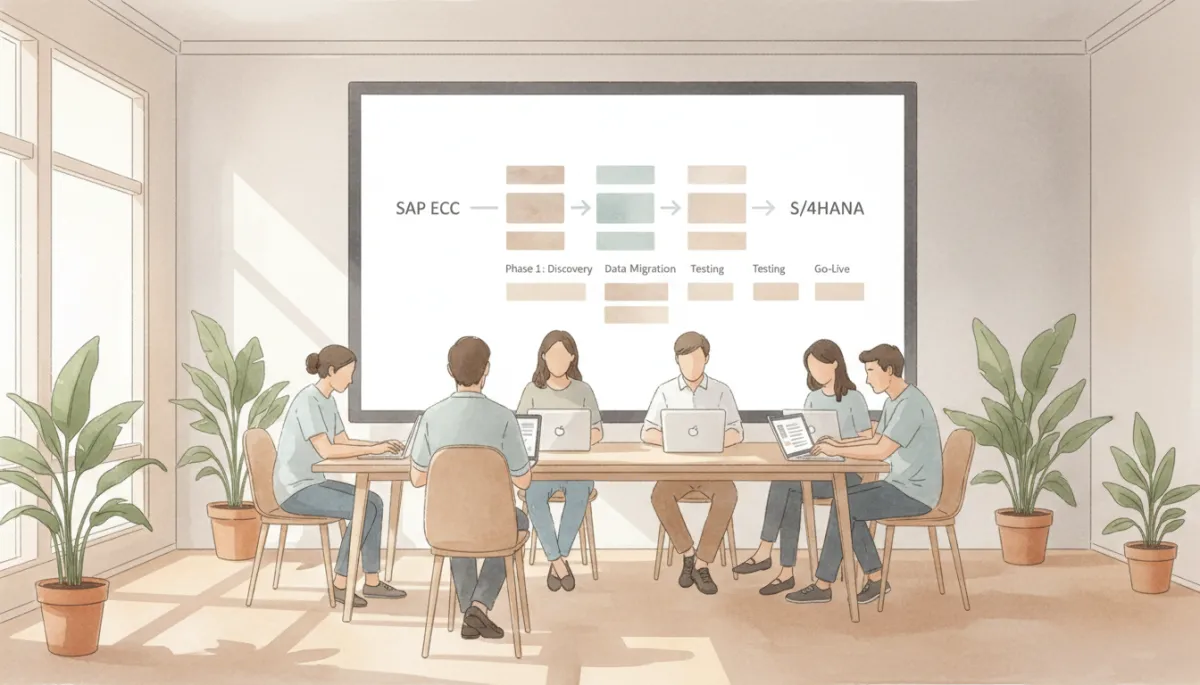
A structured roadmap reduces ERP migration risk and keeps business disruption under control.
Upgrading from SAP ECC to S/4HANA
Upgrading to SAP S/4HANA allows you to preserve the value of your existing SAP investment while moving to a modern, intelligent ERP platform. Instead of abandoning proven processes, you can transform and optimize them on a next-generation foundation.
1. Continuity of Core Processes with Modern Capabilities
S/4HANA retains SAP’s deep industry and line-of-business coverage while introducing simplified data models, real-time analytics, and a modern user experience with SAP Fiori. This means you can:
Preserve familiar business processes where they work well today
Streamline and standardize areas that have become overly customized in ECC
Unlock new capabilities in predictive analytics, automation, and embedded intelligence
2. Lower Risk Through Familiarity and Tooling
SAP provides a rich set of tools, methodologies, and best practices specifically designed for ECC to S/4HANA transitions. Combined with your internal SAP expertise and partner ecosystem, this can significantly reduce project risk:
Predefined migration paths (system conversion, selective data transition, or new implementation)
Tools to analyze custom code, data usage, and process readiness before you start
Established support models and documentation for post-go-live stabilization
3. Strategic Alignment with SAP’s Innovation Roadmap
S/4HANA is the centerpiece of SAP’s long-term strategy. By upgrading, you align your organization with a platform that continues to evolve, bringing innovations in cloud deployment, AI and automation, and industry-specific solutions. This alignment ensures:
Access to continuous enhancements rather than one-off upgrades
Compatibility with SAP’s cloud ecosystem and integration services
A future-ready foundation for digital transformation initiatives
4. Managing Cost and Complexity with a Phased Approach
An S/4HANA journey does not have to be a single “big bang” event. Many organizations choose a phased approach that:
Stabilizes the core conversion first, then layers on new capabilities over time
Prioritizes high-value areas such as finance, supply chain, or analytics for early gains
Balances investment across multiple years, aligning with budget and resource availability
📌 Key Takeaway: Leaving SAP ECC for a non-SAP ERP may appear to offer flexibility, but it introduces substantial risk around process loss, data integrity, integration, and adoption. Upgrading to S/4HANA preserves your SAP strengths while positioning your business for future innovation.
Choosing the Path That Protects and Grows Your Business
The ERP decision you make today is not just about technology; it is about safeguarding the operational DNA of your organization. A move away from SAP ECC to a non-SAP ERP can mean starting over in areas where you already have mature, effective processes. By contrast, an upgrade to S/4HANA lets you build on what works, modernize what does not, and tap into SAP’s ongoing innovation roadmap.
As you stand at this ERP crossroads, a careful assessment of risk, cost, and long-term value is essential. For many SAP-centric organizations, S/4HANA offers the most balanced path—one that reduces disruption, preserves institutional knowledge, and equips the business for the next wave of digital transformation.
